NO HYPERSCALE
DATA CENTERS FLORIDA
Protect Florida's Land. Protect Our Water.
Protect Our Farms. Protect Our Future.
Florida should not have to sacrifice its farmland, water supply, electrical grid, rural communities, natural resources, or local sovereignty to accommodate massive hyperscale data center developments.
Educate. Organize. Protect Florida.
FIND WHERE YOUR COUNTY STANDS
The map above brings all 67 Florida counties together in one color-coded view. See which counties have adopted bans or resolutions, which have residents actively organizing, and where hyperscale or large-scale data centers have been proposed. Select your county to find your commissioners and the fastest way to take action.
No Data Centers Florida is a statewide coalition of concerned citizens, farmers, ranchers, property owners, parents, environmental advocates, local leaders, and Floridians who believe decisions of this magnitude must be made with the long-term interests of our communities first.
We support technology.
Innovation has a place in Florida's future.
We oppose industrializing Florida.
We oppose turning Florida into an industrial landscape for hyperscale computing facilities whose demands for land, water, electricity, and transmission infrastructure can fundamentally alter the communities where they are built.
Florida's Natural Resources Are Not Unlimited
We are building a statewide, county-by-county coalition to educate citizens and public officials about the scale and long-term consequences of these facilities before irreversible land use and infrastructure decisions are made. We believe Florida's counties and municipalities must retain the authority to determine whether hyperscale data centers are compatible with their communities.
BAN
Encourage Florida counties and communities to prohibit hyperscale data centers where their enormous resource demands are incompatible with the community.
PROTECT
Protect Florida's land, water, agriculture, electrical grid, rural communities, taxpayers, property owners, and local home rule.
ORGANIZE
Build a statewide network of informed citizens capable of working directly with county commissioners, planning boards, local governments, farmers, ranchers, attorneys, engineers, utility experts, and community leaders.
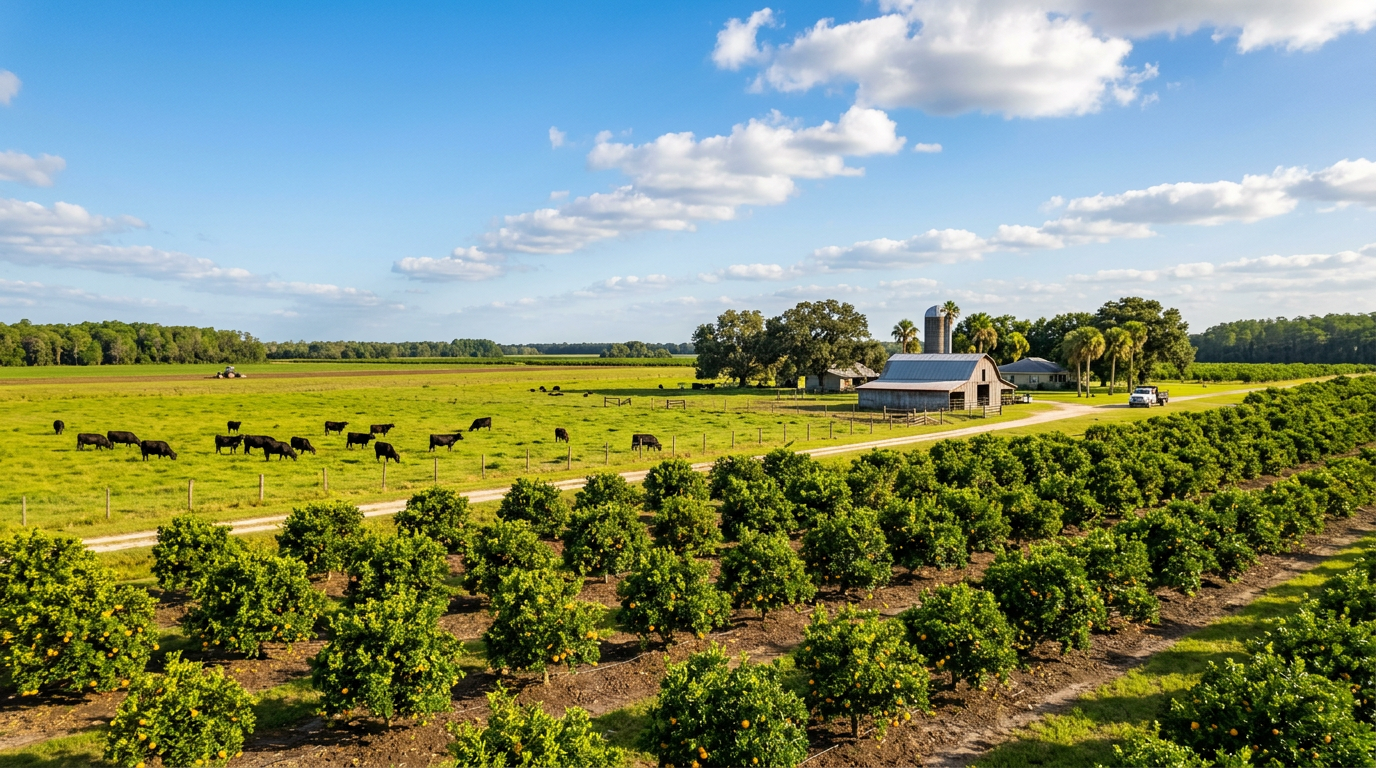
Floridians Protecting Florida
We are Floridians from every part of the state who share one concern: what happens to Florida if hyperscale data centers consume the very resources that make Florida livable?
We are concerned citizens.
We are farmers and ranchers who understand that productive agricultural land, clean water, reliable electricity, and healthy animals cannot simply be replaced once they are lost.
We are parents who want future generations to inherit a Florida with clean water, open land, working farms, thriving communities, and affordable energy.
We are property owners concerned about industrial development, transmission infrastructure, substations, noise, traffic, water demand, and the long-term effect these massive facilities can have on surrounding communities.
We are advocates for local government and home rule who believe decisions involving extraordinary demands on local land, water, wastewater systems, electrical generation, transmission infrastructure, and natural resources belong first to the people who must live with the consequences.
We are citizens concerned about the enormous computing infrastructure being built to power artificial intelligence, large-scale analytics, automated surveillance, digital identity systems, connected technologies, and other increasingly data-intensive systems.
The goal is not to stop innovation. The goal is to make sure Florida is not permanently damaged in the name of it.
Picture a Football Field. Now Multiply It.
A traditional data center may occupy roughly 10,000 to 50,000 square feet. A modern hyperscale data center can range from approximately 500,000 to 5,000,000 square feet. A standard football field, including both end zones, covers about 57,600 square feet.
Picture 87 football fields sitting side by side — not houses, not farms, not pasture, not orange groves, not wetlands. Buildings, servers, cooling equipment, electrical infrastructure, substations, and generators.
This is industrial infrastructure on an enormous scale. So when someone proposes a hyperscale data center in your community, do not picture a building. Picture 9 football fields. Then 43. Then nearly 90 — and ask where the land, water, and electricity are going to come from.
Why Hyperscale Data Centers Are Bad for the Environment
Eight reasons every Florida community should demand answers before approval.
They Consume Enormous Amounts of Land
Hyperscale developments can consume enormous amounts of land.
Once agricultural land or open space is paved, industrialized, surrounded by electrical infrastructure, or permanently rezoned, restoring it to productive agricultural use may be extremely difficult.
Questions every community should ask
- How much agricultural land will be permanently converted?
- What happens if the facility becomes technologically obsolete?
- Who pays to remove it?
- Can that land ever realistically become farmland again?
Grow food, not server farms. Florida’s farmland is a strategic resource — once we lose productive acreage, we cannot assume we can simply recreate it somewhere else.
They Place Massive Demands on Water
Florida cannot manufacture more water.
Data centers operate continuously, and certain cooling systems can require tremendous amounts of water — hundreds of thousands to millions of gallons per day, depending on the facility and cooling technology.
Questions every community should ask
- Where will the water come from?
- What aquifer or municipal supply will support the facility?
- What type of cooling system will be used?
- How much water will actually be consumed?
- Will wastewater infrastructure have to be expanded?
- What chemicals will be used in cooling systems?
- How will leaks and spills be addressed?
- How could future drought or population growth affect water availability?
Florida’s water belongs to future generations too.
They Use Extraordinary Amounts of Electricity
Hyperscale data centers can require extraordinary amounts of electricity — approximately 50 to more than 300 megawatts, compared with roughly 1 to 5 megawatts for traditional facilities.
That demand can require new substations, new transmission lines, additional generation, utility upgrades, and major infrastructure investment.
Questions every community should ask
- Who pays for those upgrades?
- Will residential customers subsidize infrastructure?
- Will enormous new industrial loads affect future electricity prices?
- What happens to grid reliability?
- Will additional power generation be required?
- Will Florida families compete with hyperscale facilities for electrical capacity during periods of peak demand?
They Threaten Florida Agriculture
Farms and ranches depend upon an interconnected system: land, water, reliable electricity, healthy soil, livestock health, predictable infrastructure, transportation, and communities that remain economically viable for agricultural families.
Large industrial developments can affect farmland directly through land conversion and indirectly through competing demands for water, electricity, roads, utility infrastructure, and surrounding development.
Florida cannot claim to protect food security while simultaneously industrializing the land that produces our food.
They Bring Industrial Noise and Mechanical Impacts
Hyperscale facilities contain substantial mechanical infrastructure, including cooling systems, fans, electrical equipment, transformers, and backup generation.
Noise should be evaluated before approval, particularly when facilities are proposed near homes, farms, livestock, schools, or rural communities.
Questions every community should ask
- What will the noise levels be during operation?
- Will the noise continue 24 hours a day?
- What will nearby residents, farms, and ranches experience?
- What independent noise studies have been conducted?
- How will violations be monitored and enforced?
They Can Affect Air Quality
Data centers must remain operational even when the grid fails. That can mean substantial backup power infrastructure.
Questions every community should ask
- How many backup generators will be installed?
- What fuel will they use?
- How frequently will they be tested?
- What are the projected emissions?
- How close will they be to homes, schools, farms, and livestock?
- Will additional regional power generation be required?
They Can Permanently Alter Local Infrastructure
Hyperscale data centers are not stand-alone buildings. They often require new roads, utility extensions, substations, transmission lines, water infrastructure, wastewater capacity, and supporting industrial development.
Once this infrastructure is built, communities may live with those changes for generations.
They Raise Long-Term Stewardship Questions
This is not simply a question of whether technology is good or bad. It is a question of stewardship.
Communities should think beyond short-term promises and consider what happens if a facility is no longer needed in ten years, whether farmland can realistically return to agricultural use, and whether today’s decisions leave future communities with more opportunities or more challenges.
Questions every community should ask
- What is the decommissioning plan?
- Who pays for it?
- Is money secured in advance for cleanup and removal?
- Who restores the property?
- What happens if the company sells, relocates, or goes bankrupt?
The Infrastructure Question Is Bigger Than Buildings
Hyperscale data centers also provide computing capacity for increasingly sophisticated digital systems. Any individual technology may be promoted as useful — but when enormous quantities of information can be collected, connected, analyzed, and retained, citizens have legitimate questions.
Technologies these facilities can power
- Automated license plate readers
- Facial recognition
- Digital identity systems
- Connected vehicles
- Smart city technologies
- Artificial intelligence
- Large-scale data analytics
Questions Florida should ask first
- Who controls the data?
- Who can access it?
- How long is it retained?
- Can different databases be connected?
- What safeguards protect citizens?
- What oversight exists?
Technology should serve free people. Free people should never become servants of technology.
Florida Should Not Become America's Hyperscale Industrial Zone
We believe Florida must put citizens before corporations and long-term stewardship before short-term promises. Economic development should enhance the communities in which it occurs — it should not force those communities to gamble their:
Before a hyperscale data center receives approval, Floridians deserve the full story. And where the costs are too great, local communities should have the right to simply say:
Your County Is the Front Line
Major land use decisions are often made locally — which means citizens have enormous power before approvals are granted. The best time to become involved is before major decisions have already been made.
Contact Your County Commissioners
Tell them you want permanent protections from hyperscale data centers.
Get startedDownload the Toolkit
Get model language, public comments, research, questions for commissioners, and educational materials.
Get startedBuild Your County Team
Farmers. Ranchers. Parents. Engineers. Attorneys. Business owners. Environmental professionals. Utility experts. Property owners.
Get startedTrack Your County
See which Florida counties have enacted bans, moratoriums, or other protections.
Get started67 Counties. One Florida.
We only get one Florida. Once our farmland is gone, it is gone. Once our water is overallocated, everyone feels it. Once massive transmission corridors and industrial infrastructure are built, they become part of the landscape for generations.
Florida's future should be decided by Floridians.
Protect the land. Protect the water. Protect the farms. Protect our freedom.
NO DATA CENTERS FLORIDA
Local Action. Statewide Protection.